HydroDome Mobile
A rapidly deployable system that protects communities and critical infrastructure from wildfire — stood up in hours, autonomous once running.

Nick Hill
Founder, Carmanah Wildfire. 15+ years of wildfire field leadership.
Dakotah Daily
Wildfire geospatial specialist and experienced project manager.
Brian Mueller
Design, welding, and fabrication; UAV and systems expert.

Dr. Mehran Mehrandezh
PhD, Professor of Industrial Systems Engineering.
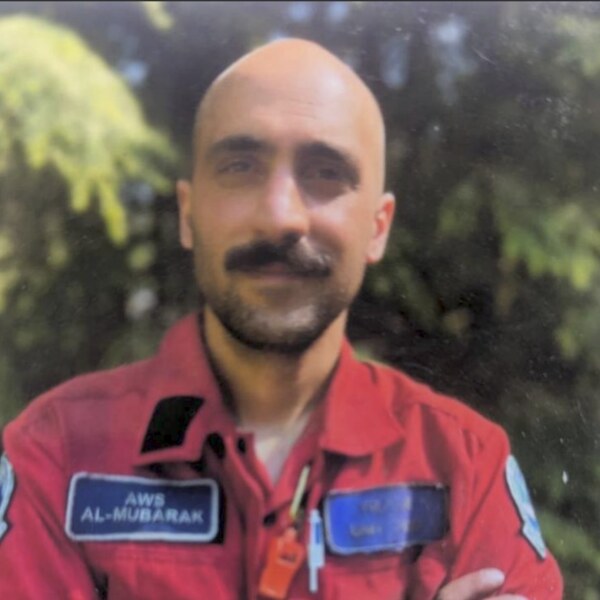
Aws Al-Mubarak
8 years BC Wildfire — Division Supervisor and NFPA structural firefighter.

Micah Bayless
Senior Aerospace Engineer — power delivery specialist.
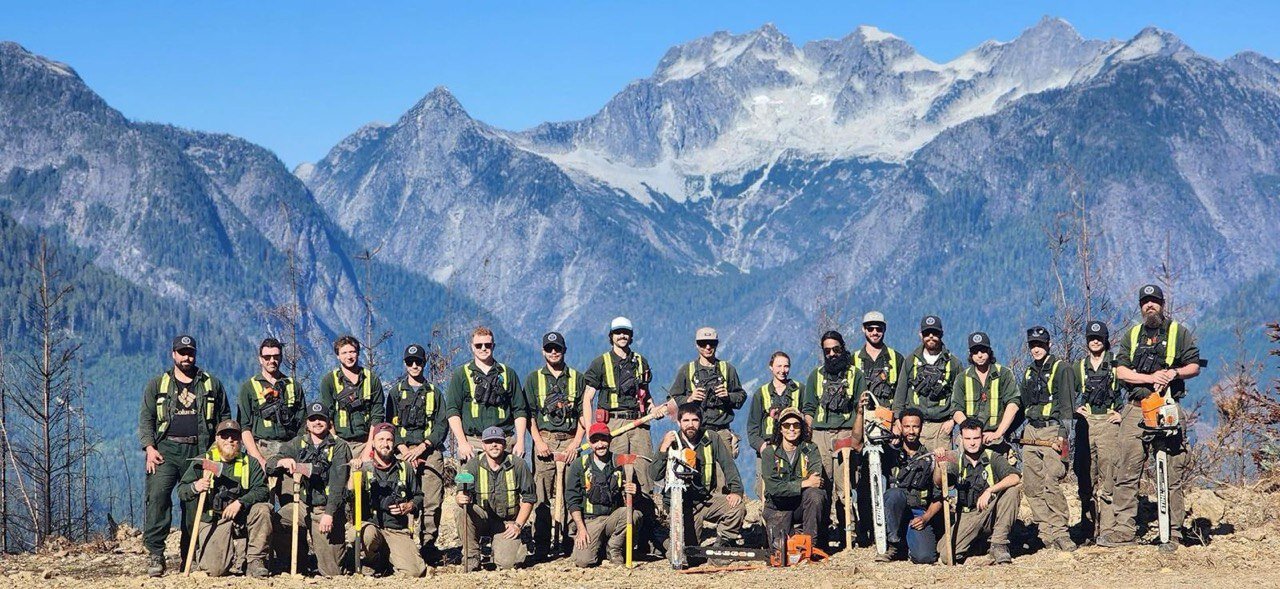
Founded in 2019 — boots on the ground since 2021, grown from 30 to 160+ seasonal employees delivering wildfire response across BC, Alberta, and the Yukon.
Type II & III Fire Crews
Reliable, mentorship-driven wildfire crews for extended suppression and complex operations.
Wildfire & Crew Training
Hands-on programs for communities, industry & First Nations — plus internal boot camps to international standards.
Falling, Danger Trees & Vegetation
Certified fallers and DTAs for land clearing, ROW maintenance, and hazard-tree removal.
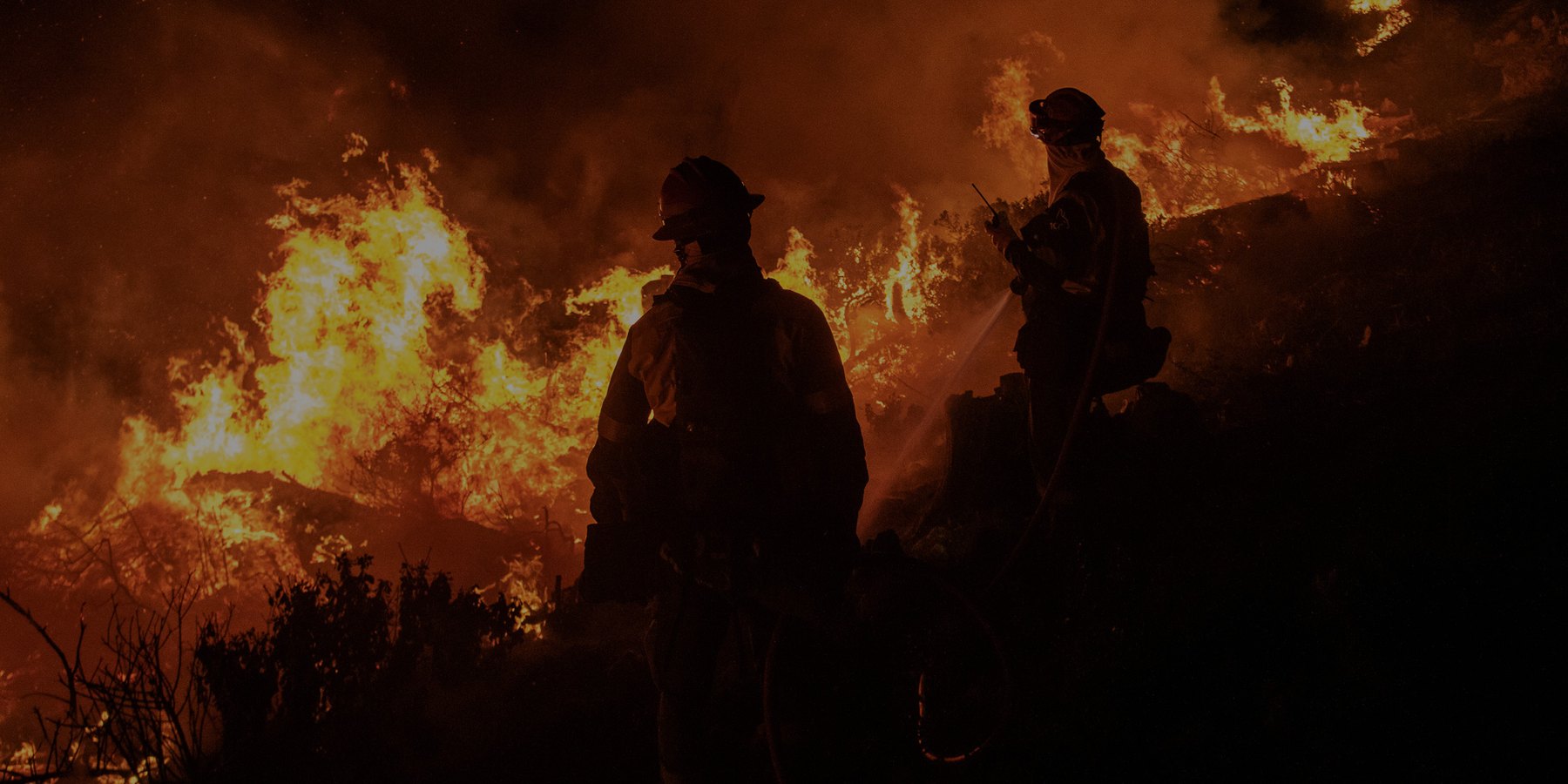
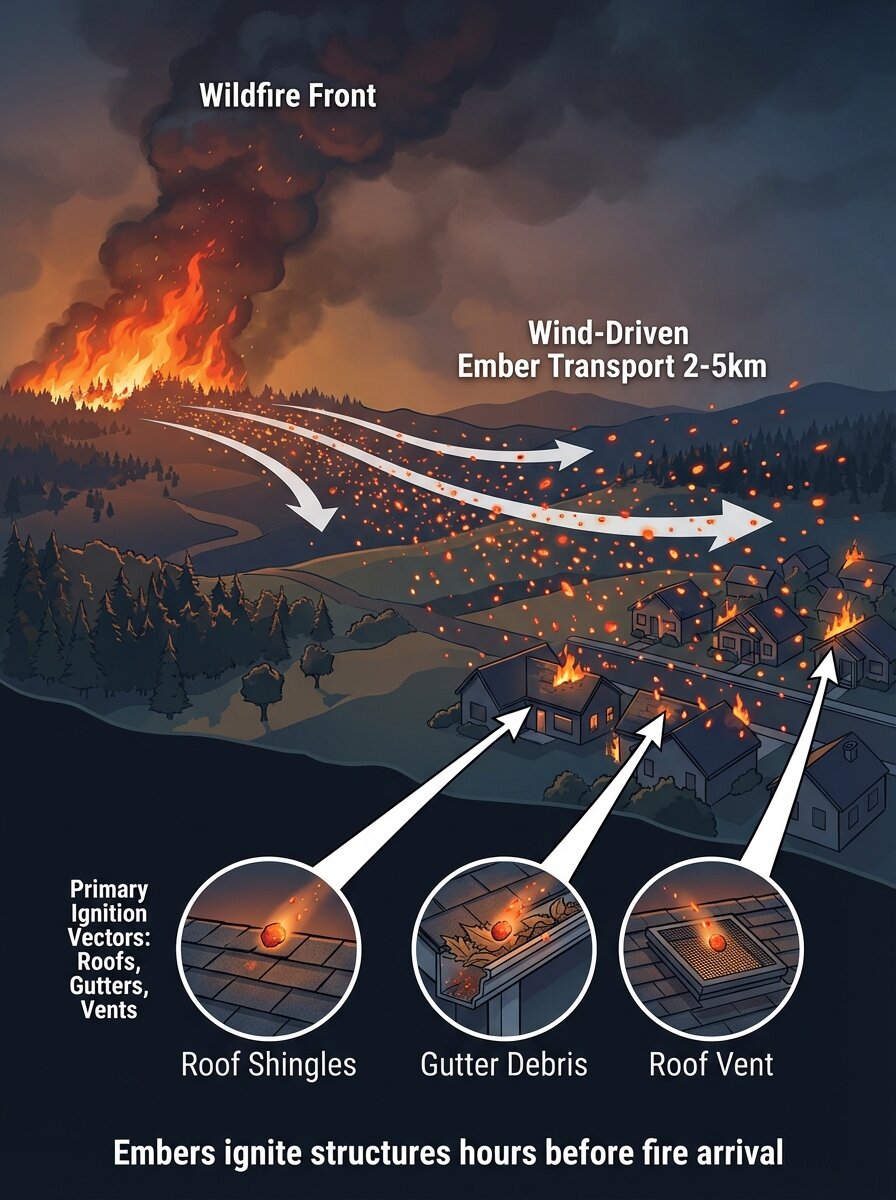
Burning debris is launched ahead of the fire front by convective updrafts — igniting structures hours before the flames arrive.
- Embers flank the line.
- They split resources at the worst possible moment.
- They turn defended communities into new fire sources.
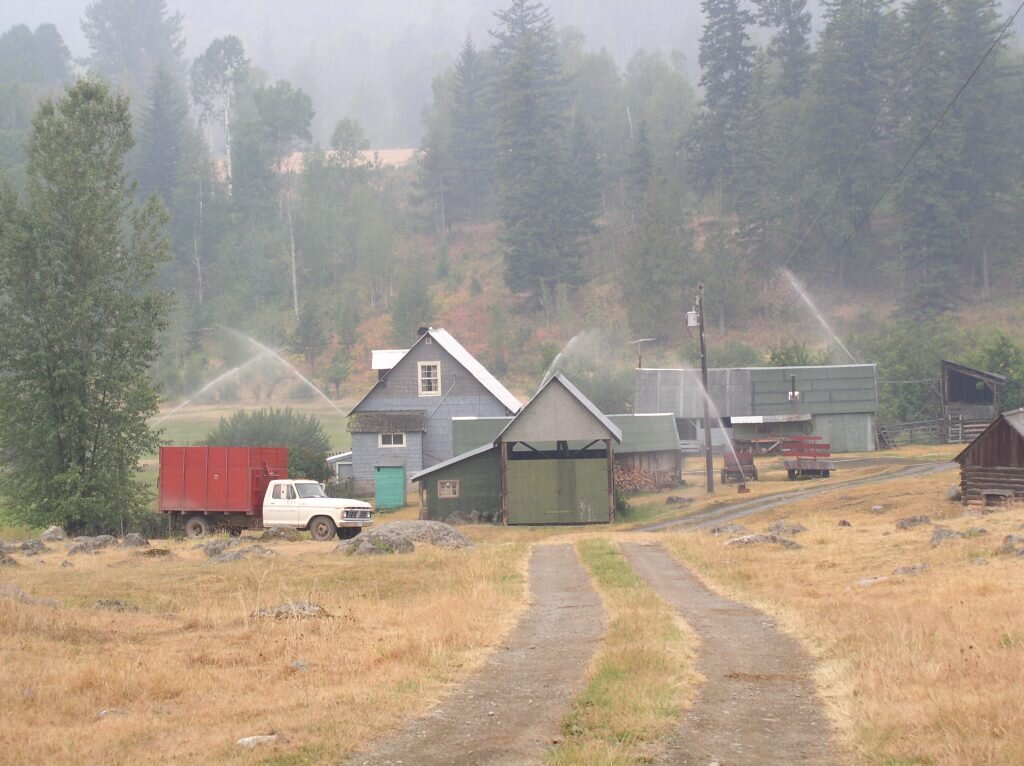
We've built and deployed wildfire defense systems in the field — and seen what works and what doesn't.
- Structure protection pre-wets buildings with large water-moving systems, creating a humidity dome.
- It has saved thousands of homes — but setup time limits its reach when fires move fast.
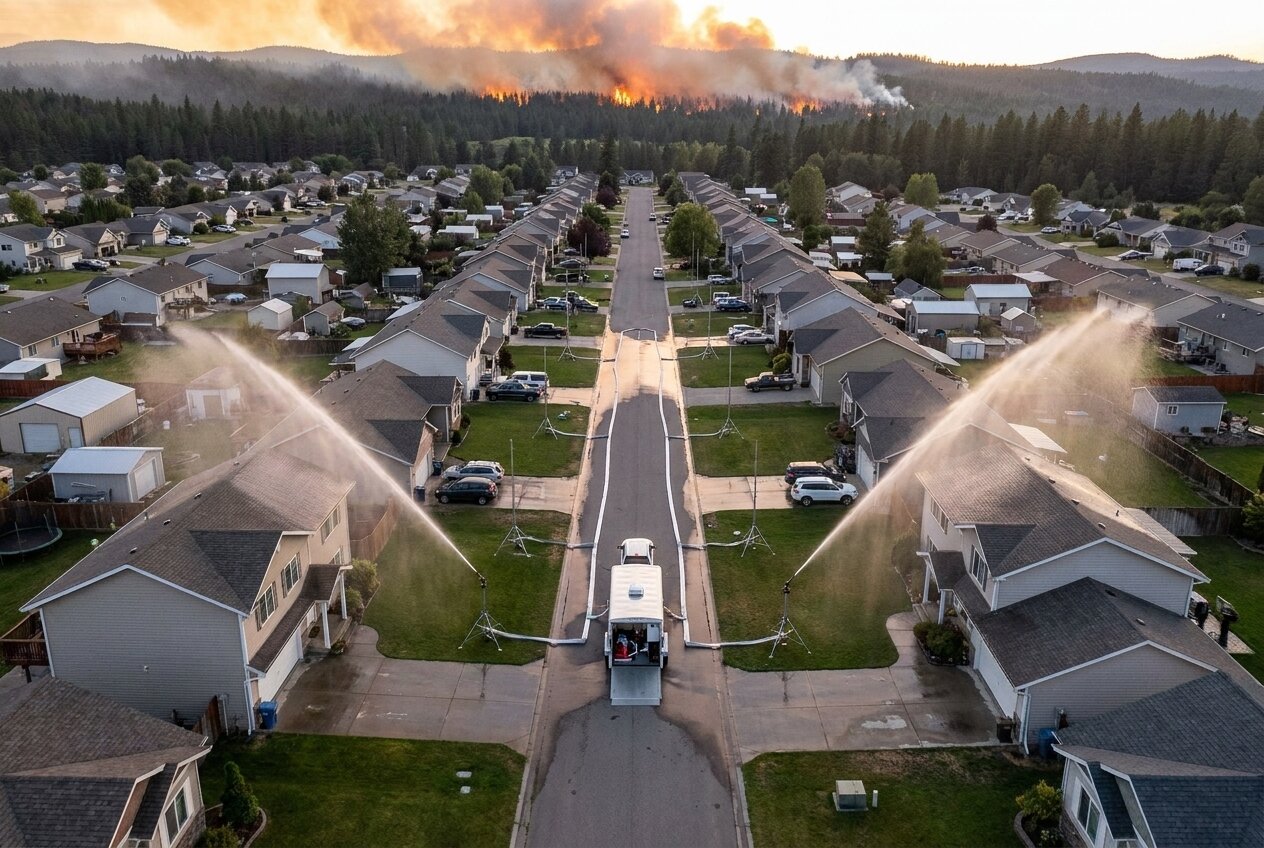
- The answer: a pre-staged, rapidly deployable trailer already on site, protecting the perimeter before the fire arrives.
- Sequentially sprays 8 Nelson Big Gun sprinklers across ~8 hectares — firing four at a time, using a pump sized for four guns, not eight.
- Fewer, larger sprinklers mean a 1–2 person, 1–2 hour setup.
- Sequential spraying runs on a ~100 hp pump instead of 300 hp.
- Wireless, independently controlled heads activate by weather and conditions — semi-autonomous with remote monitoring.
- A new category: more coverage and less setup than a structure trailer, smaller and cheaper than a single giant cannon.
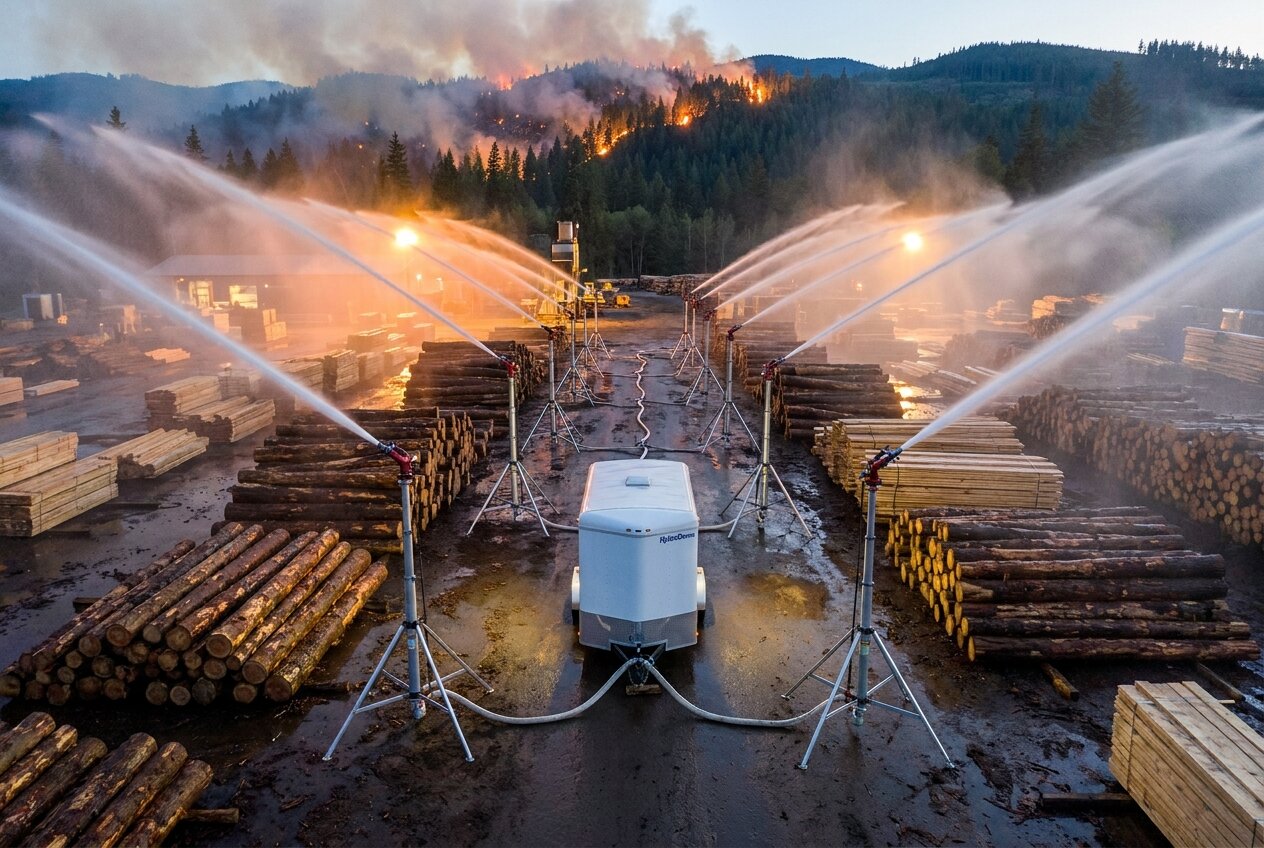
vs WASP — SPU Trailers
- 1–2 person, ~1–2 hr deploy vs. a 5-person crew at ~1 hr per structure — a ~15-hour job across 25–30 structures.
- Wets the entire zone (~8 ha), not just structures — roughly double WASP's wetted footprint and denying ember cast in the gaps WASP leaves dry.
- A handful of large heads instead of 100+ small components to set up and maintain.
vs FireWolf — Single Cannon
- Broad-area ember defense vs. point suppression — complementary, not interchangeable.
- ~8 ha zone coverage vs. FireWolf's single ~1.3 ha point — roughly 6× the area at comparable cost.
- Pre-wets ahead of the front instead of chasing a hot spot.
vs RainStream™ — Telescopic Towers
- Same wind-carried principle, but a much smaller pump by firing sequentially instead of one giant cannon.
- Lower cost (~$700K CAD RainStream vs. HydroDome's ~$300K target) for comparable or greater coverage.
How it works
- Type 2 Structure Protection Unit — a rolling warehouse of 100+ sprinklers (gutter mounts, roof butterfly sprinklers, ground spikes) and up to 15,000 ft of forestry hose.
- Crew manually plumbs each structure, creating individual "humidity bubbles" over 25–30 scattered structures.
Shortcomings
- Only wets the structures and their immediate footprint — the land between properties stays dry, so embers can still ignite vegetation and spread structure-to-structure.
- Highly labour-intensive: roof climbing, hand-laid hose, no remote or autonomous operation; hundreds of small components to install and maintain.
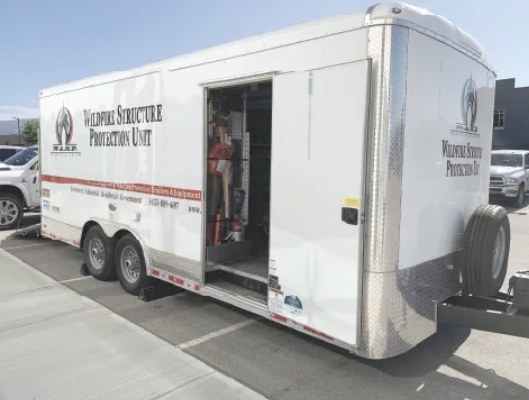
How it works
- Robotic thermal-imaging water cannon (Unifire Force 50) on a telescoping mast; the camera detects the hottest point and auto-aims — active fire suppression, not pre-wetting.
Why HydroDome is different
- FireWolf fights an active fire at one point; HydroDome pre-wets an entire zone before the fire arrives.
- 8 sprinklers across the trailer's coverage vs. one cannon — roughly 6× the area — and at lower cost than FireWolf's robotic platform.
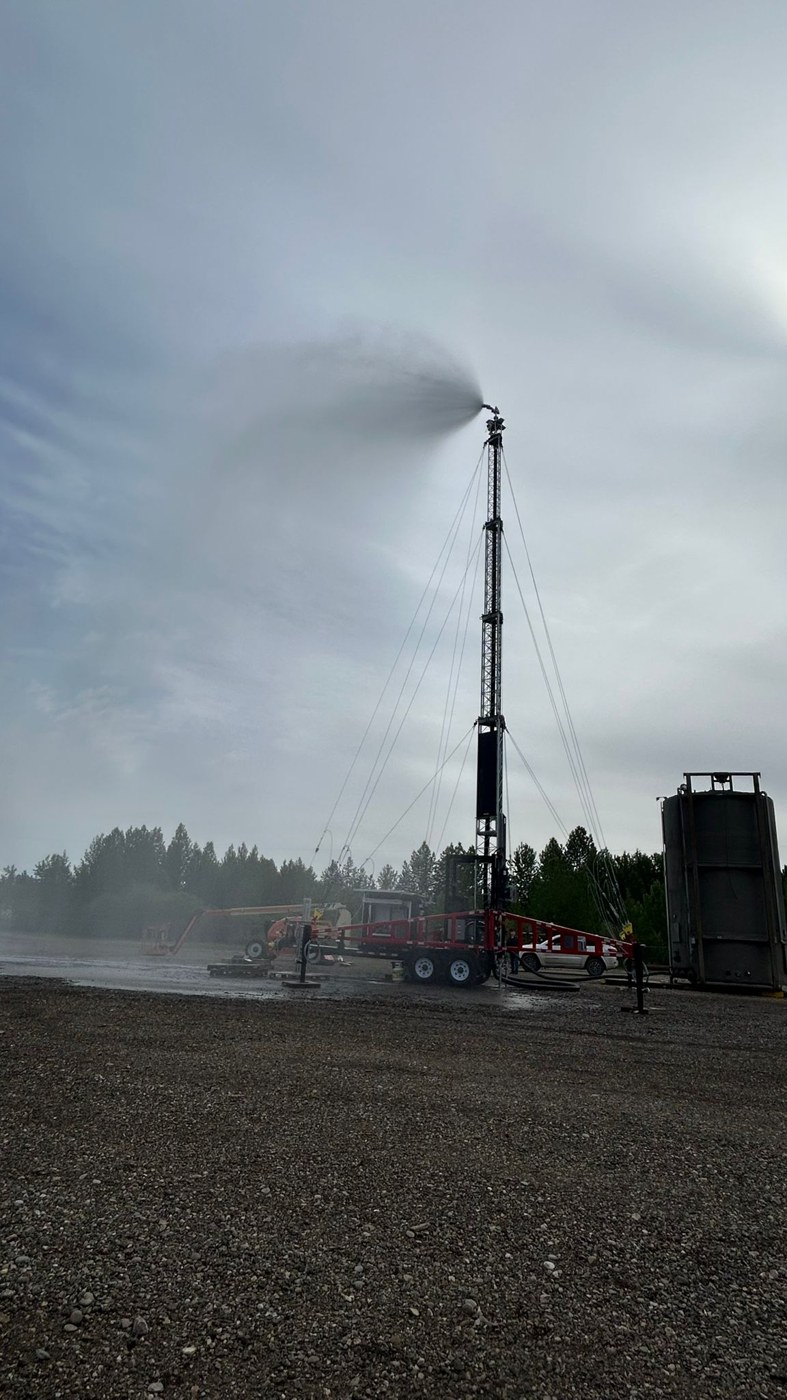
How it works
- Trailer-mounted engine/pump driving a single ~100 ft (30 m) telescoping mast with one high-volume cannon on top — a "sprinkler on steroids."
- Positioned on the upwind edge; launches water ~100 ft up so wind carries a dense mist downwind, forming a "synthetic rain" curtain over the footprint.
Shortcomings
- One giant cannon running continuously demands a large pump — which drives the size, weight, and ~$700K price.
- Coverage swings hard with conditions — the 1–18 acre range tells the story; a calm or wrong-direction wind day shrinks the protected footprint.
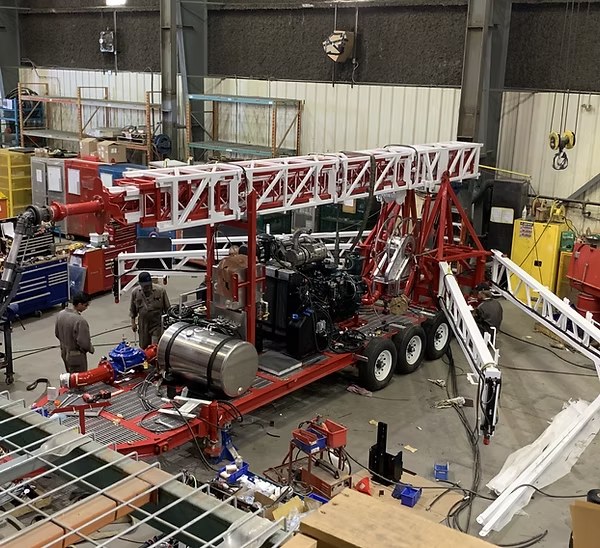
Predict where embers land — apply exactly enough water, nowhere wasted.
- Real-time weather monitoring — predicts where embers will land.
- Redbook fuel-moisture codes + ignition modeling — calculates the right amount of water, no waste.
- Zone-by-zone sequencing — covers the whole site on a single pump.
- Smart water management — auto-adjusts spray and pump cycling.
- LoRa mesh backup comms — no cellular or internet needed.
- Single dashboard — live flow, pressure, water, and fire-weather.
Mitacs × University of Regina
Our R&D engine: Mitacs funds and embeds a PhD engineering team at the University of Regina that is building and testing the HydroDome prototype.
NRC IRAP
Canada's flagship industrial R&D program — funding plus a dedicated Industrial Technology Advisor guiding us from prototype to commercial product.
Global Affairs Canada
CanExport Innovation grant (approved) — funding international R&D partnerships and export-market expansion for HydroDome.
ISED — Accelerated Growth Service
A federal advisor who coordinates government programs and connections to help scale HydroDome as a high-growth Canadian company.
Revenue beyond grants
Sawmills, mines, pipelines, data centres, airports, ski resorts, and remote camps can buy a deployable unit directly.
Flexible ownership
Sell, lease, or a "HydroDome Ready" annual contract — the customer owns the asset and deploys it when fire threatens, with no standing crew.
Faster deployments
A property owner's two-week decision beats a multi-year municipal cycle, with a clear, direct return on investment.
Test coverage on any real community before breaking ground — and optimize protection per dollar.
- Model real wildfire scenarios using actual building footprints, road networks, and terrain.
- Place towers, configure sprinkler types, and test coverage layouts before deploying.
- Run fire-spread simulations with adjustable wind, ignition points, and terrain.
- Track buildings protected in real time with cost-vs-damage analysis.
- Save and compare layouts to optimize coverage per dollar.
The mobile unit comes first — but our longer-term goal is a permanent, always-on version built into the community itself: a network of fixed towers that blanket a whole town in protective moisture the moment wildfire approaches.
- Always ready, one-button activation — no crews, no setup. Each tower sprays a curtain of moisture that stops wind-blown embers from igniting roofs and gutters.
- Works when the grid is down — buried 8,000-gal cisterns fed by the municipal main, with buried propane backup that also delivers emergency power to the community.
- Built on SCADA and compatible with existing municipal water systems — complements fire departments without adding operational burden.
- Envisioned first community pilot: Fort St. James, BC — ~20 towers protecting the hospital, emergency shelter, and municipal core.
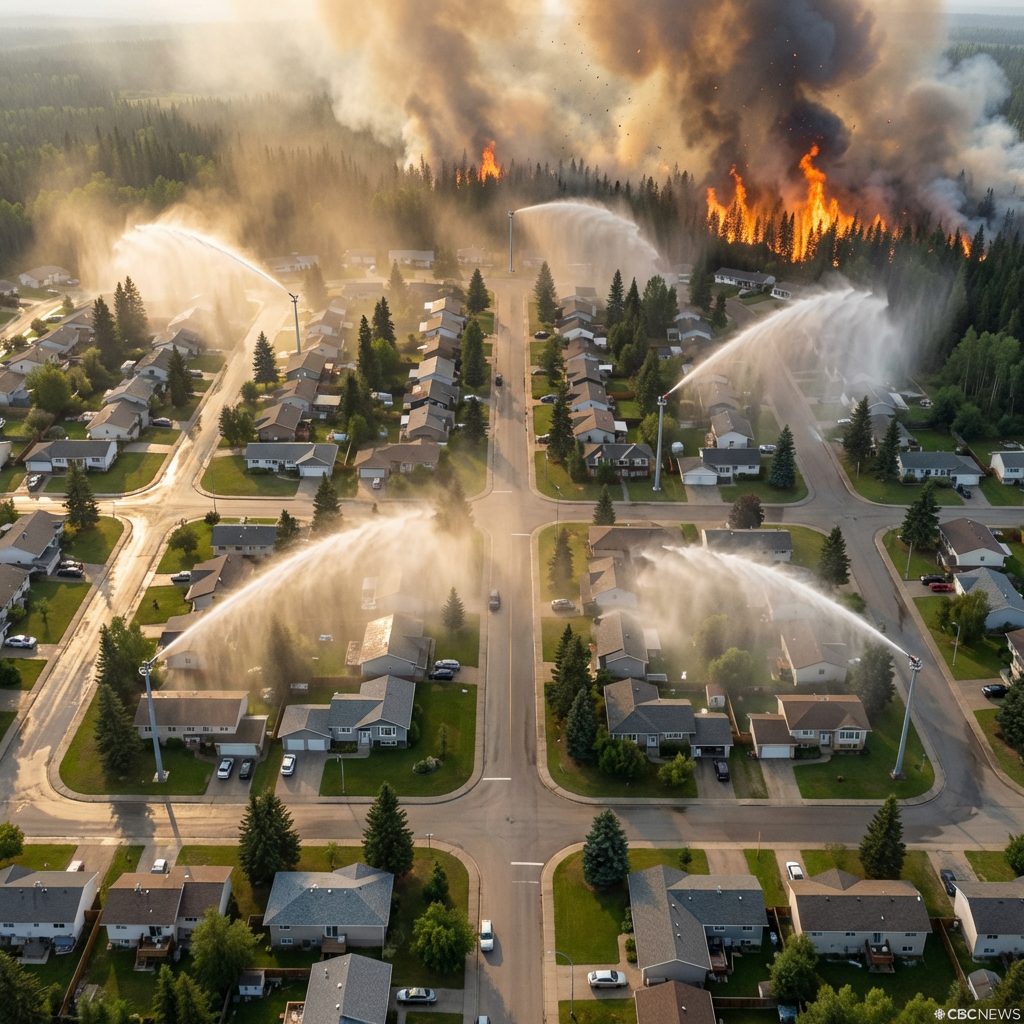
Wildfire defence & smart water management — protecting communities and critical infrastructure before the fire arrives.
Nick — 250 588 7544